United States General George Patton was a notorious World War II Officer who had a very unique way of doing things. For one, he had a rivalry with ally Great Britain's prestigious General Bernard Law Montgomery. He also pushed his soldiers MUCH HARDER than any other Allied Officer. The book Killing Patton reflects his life during and after World War II, including his death, which is today considered the most pedestrian way for any military officer to die.
The book starts off when Patton's Battalion is invading Fort Driant, a German Military Base in Eastern France/Western Germany. Here, Bill O'Reilly, the author goes into the point-of-view of one of Patton's soldiers, a Private, to be exact. O'Reilly describes his emotional state of which he feels when the Germans fire at him while he takes cover. This I believe, is one of O'Reilly's pros of writing, he is descriptive. Yet sometimes O'Reilly, and his co-author, Martin Dugard, are at times too descriptive. Some examples of the two authors exercising this practice are when German Field Marshal Erwin Rommel is going through his "execution" for treason which is self-inflicted, as well as Patton's feelings for the other generals, the authors put Patton in third-person as he reflects on the generals demeanor.
O'Reilly and Dugard's writing style has been considered weird at times, with the overly-long reflections of the characters' emotional state, what they are feeling, what they are doing, why they are doing it, many other authors consider this practice helpful, yet not needed, to make the book more appealing to readers. To me, I think in some cases, this practice is useful, yet when it becomes too much, it is no longer needed. I went into Killing Patton hoping to learn more about World War II, as well as the notorious generals who served in it, such as Patton, Rommel, Montgomery, Eisenhower, etc.
But Killing Patton isn't the only book O'Reilly and Dugard have written that have this writing style, books such as Killing Lincoln, Killing Kennedy, and Killing Jesus, all express the same writing style, and for many readers, they say that the writing style doesn't apply to all of the books, the way it did for Patton, Kennedy and Lincoln (somewhat). I guess you know the odd one out then, Killing Jesus, the standout novel from Bill O'Reilly, which dates back to the time before The Bible was written, which for many readers, is a time too far away for O'Reilly to write about.
Back to Killing Patton. As anticipated, the book goes on to the end of World War II, with the Germans surrendering, as well as the Japanese after the Hiroshima and Nagasaki bombs. You may think that the book is done, the war is over, it's totally peaceful. Well, actually it has been said that after WWII, there was no such thing as peace. The two remaining superpowers of the world, the Soviet Union, or now Russia, and the United States of America, didn't start completely butting heads until after General Patton's death.
This isn't a spoiler, if you payed close attention to history. But General George Patton died after fatal wounds from a car accident in Germany. A truck driven by a few drunk American soldiers was driving down a road, as careless as they could be. Meanwhile, General Patton was going hunting, and was driving along a road, nearly perpendicular to the drunken truck's road. At the intersection which the two roads met, the two cars collided. The general broke his neck, along with several back bones either sprained or broken, most of them broken. He died in a German Hospital 12 days following the car crash.
In conclusion, from all of my reading and research, I believe that most historical biographies are accurate, with some such as Killing Jesus, being questionable, with no completely-truthful proof other than The Bible to justify whether its Fact of Fiction.
Tuesday, May 26, 2015

Thursday, May 21, 2015
[BEST SELLERS]: Reading Wishlist and Book 5
After a great year in Best Sellers, I believe as a change going into this summer, as well as going into Sophomore year of High School, I will be trying to read more, at least one book per month. During Best Sellers, I read titles such as 11/22/63 by Stephen King, American Sniper by Chris Kyle, Shutter Island by Dennis Lehane, and Killing Patton by Bill O'Reilly and Martin Dugard. All of those were great books, and I recommend them to anyone who is interested in a learning experience of reading.
For this Summer Reading Assignment, I have decided to read The Book Theif, in order to learn more about life in Nazi Germany in the 1930's and 40's. The book is written by Markus Zusak, and has been made into a movie, just last year. My goal for the summer reading assignment is to finish the book in less than a month, so I know how to pace myself when it comes to getting the most out of the book.
Regarding on my reading wishlist, it has been added to my blog, and it is located to the right of my posts.
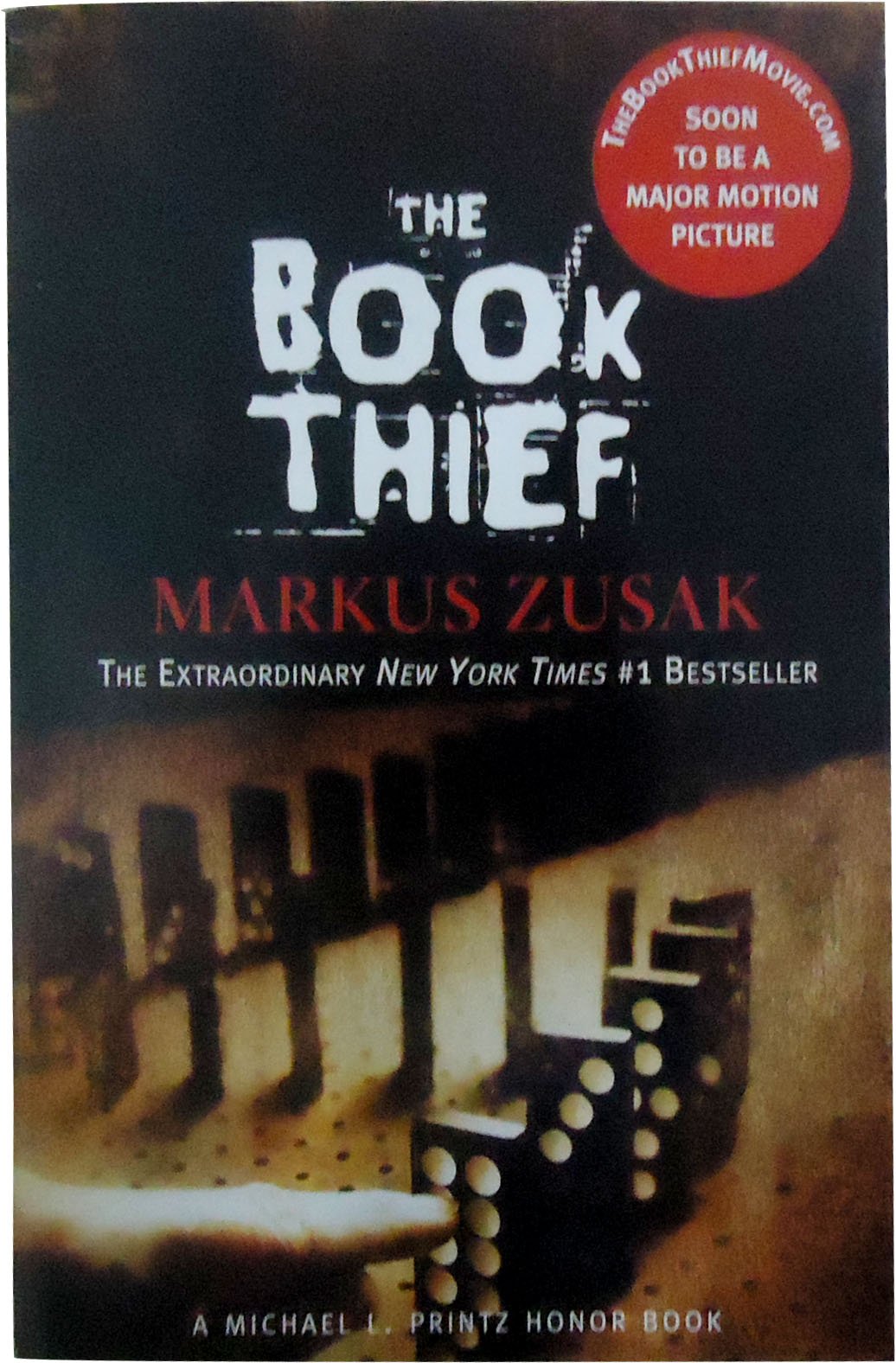
For this Summer Reading Assignment, I have decided to read The Book Theif, in order to learn more about life in Nazi Germany in the 1930's and 40's. The book is written by Markus Zusak, and has been made into a movie, just last year. My goal for the summer reading assignment is to finish the book in less than a month, so I know how to pace myself when it comes to getting the most out of the book.
Regarding on my reading wishlist, it has been added to my blog, and it is located to the right of my posts.
Wednesday, May 20, 2015
[BEST SELLERS]: Book 4 Checkpoint 2: Bill O'Reilly's Writing
If you haven't heard of him, Bill O'Reilly is a political analyst who stars on "The O'Reilly Factor", a political TV show that presents news regarding U.S. politics, as well as foreign relations or actions.
But that's not all O'Reilly does, he writes books as well. Some are political, but one of the most well known series he has written, with Martin Dugard, is the Killing series, four books by the names of Killing Lincoln, Killing Kennedy, Killing Patton, which I read along with Killing Lincoln, and lastly, Killing Jesus. People have a lot to say about O'Reilly and Dugard's writing. Some people say his writing style doesn't appeal to most readers. Others say his books are totally untrue, which I only believe partially.
One of O'Reilly and Dugard's books, Killing Jesus, has been criticized as being "fiction", on many fronts, or websites. On one website, salon.com, writer Robert M. Price released an article about it, titled: "Bill O'Reilly's Killing Jesus is fiction: Fact-checking the Fox News' anchor's "history" of Jesus's death". The article states that the principles in Killing Jesus don't work because, according to the writer, only fits with the other three books in the series.
I believe that O'Reilly's writing style is a little weird, but it somewhat makes sense, because if he didn't use the writing style he did, we wouldn't have a clue what happened in the 1940's, 1860's, or further back into the past.
In conclusion, I do believe Bill O'Reilly's writing style is justified, and if people are criticizing his writing in Killing Jesus, think about it, Jesus's story is historical. so why not write it historically?
One of O'Reilly and Dugard's books, Killing Jesus, has been criticized as being "fiction", on many fronts, or websites. On one website, salon.com, writer Robert M. Price released an article about it, titled: "Bill O'Reilly's Killing Jesus is fiction: Fact-checking the Fox News' anchor's "history" of Jesus's death". The article states that the principles in Killing Jesus don't work because, according to the writer, only fits with the other three books in the series.
I believe that O'Reilly's writing style is a little weird, but it somewhat makes sense, because if he didn't use the writing style he did, we wouldn't have a clue what happened in the 1940's, 1860's, or further back into the past.
In conclusion, I do believe Bill O'Reilly's writing style is justified, and if people are criticizing his writing in Killing Jesus, think about it, Jesus's story is historical. so why not write it historically?
Wednesday, May 13, 2015
[BEST SELLERS]: Book 4 Checkpoint 1: Killing Patton Review
You may have heard of legendary WWII General, George Patton, maybe in history class or just around, but regardless, his story is one well worth reading.
The book, Killing Patton starts off in Metz, France. The American soldiers are pushing through the Western Front, closing in on Nazi Germany. The Americans are under fire during the Invasion of Fort Driant. What I like here is Bill O'Reilly's writing style. He did this in Killing Lincoln as well, but he describes a soldier's point of view, not Patton's in this scenario, but the soldier who is experiencing the action, and describes his actions throughout the battle, such as feelings, view of person's surroundings, etc.
Pro's and Con's of Killing Patton. Before this starts, the book was very good, probably one of the best historical books I have read. I checked it's given facts, and for the most part, with the exception of one fact, all of the other facts were correct. Not bad for a politician. Now, onto the pro's and con's.
Pros:
Saying that, I'd like to use an excerpt from the book as an example. This example is about the legendary "Desert Fox", German General and Tank Commander Erwin Rommel was known for his fight against the Allies in North Africa, fighting off Generals Bernard Law Montgomery (Great Britain) and General George Patton (United States). Here is the excerpt:
"But Rommel is not sure whether Hitler knows of his betrayal. He is Germany's most famous general, a man who has shown his loyalty to the Fuhrer through extraordinary service on the field of battle, and a man the Fuhrer holds in high esteem. Until recently, that feeling was mutual. But Hitler will never sue for peace, and this could lead to the complete destruction of Germany. Rommel now has grave doubts about Hitler's ability to lead the war effort, and is in favor for negotiating with the Allies rather than continuing to fight. But he has never voiced this opinion publicly." (O'Reilly 33)
Bill O'Reilly, to me, did a great job of informing the reader about each character, whether major or minor impact, enhancing the book, making it out like its almost a movie in your head. But yes, that is probably the best part of the book, that it goes in-depth.
Pro's and Con's of Killing Patton. Before this starts, the book was very good, probably one of the best historical books I have read. I checked it's given facts, and for the most part, with the exception of one fact, all of the other facts were correct. Not bad for a politician. Now, onto the pro's and con's.
Pros:
- Book goes in-depth with the characters, what they do, who they interact with, what their thoughts are( kinda weird since this takes place in the 1940's), and more.
Saying that, I'd like to use an excerpt from the book as an example. This example is about the legendary "Desert Fox", German General and Tank Commander Erwin Rommel was known for his fight against the Allies in North Africa, fighting off Generals Bernard Law Montgomery (Great Britain) and General George Patton (United States). Here is the excerpt:
"But Rommel is not sure whether Hitler knows of his betrayal. He is Germany's most famous general, a man who has shown his loyalty to the Fuhrer through extraordinary service on the field of battle, and a man the Fuhrer holds in high esteem. Until recently, that feeling was mutual. But Hitler will never sue for peace, and this could lead to the complete destruction of Germany. Rommel now has grave doubts about Hitler's ability to lead the war effort, and is in favor for negotiating with the Allies rather than continuing to fight. But he has never voiced this opinion publicly." (O'Reilly 33)
Bill O'Reilly, to me, did a great job of informing the reader about each character, whether major or minor impact, enhancing the book, making it out like its almost a movie in your head. But yes, that is probably the best part of the book, that it goes in-depth.
- Includes maps of WWII action, pictures marking historical people, events, etc.
The maps included within the book are all on the advancing of the Allied Forces, moving deeper and deeper into the heart of Nazi Germany. Some maps are invasions of forts, such as the Invasion of Fort Driant, a German base. The photographs are of people such as Franklin D. Roosevelt, the President of the United States who held office for most of the war, up until his death after a stroke.
I believe that the added maps and pictures enhance the book in a way to make the book more visual in a way that the reader will know what's going on in the book, to a better level. I wish Bill O'Reilly did this for his other "Killing" novel, Killing Lincoln , since its from the 1800's, and its hard to connect with a book that is set from a time period that is a significant long time ago.
Cons:
• Book is too descriptive and should have started at the end of WWII not a year before it ended.
This was probably the biggest problem I had with the book. I personally read it so I'd learn about how George Patton died, not so much all of the backstory that makes up over 3/4ths of the book. The only good part about the backstory is that its accurate, yet in saying that, it
wasn't necessary.
I think Bill O' Reilly should fix this, because when you look at his "Killing" books, Killing Patton is the only book that doesn't need backstory. I say that in which for Killing Lincoln, the backstory is needed in order to understand why John Wilkes Booth killed Abraham Lincoln. Same for Killing Kennedy, and Killing Jesus.
Overall, I thought that the book was good, despite the long backstory, it was very informational and helped in my history class as well. Regarding recommendations, I would only recommend this book for people who want to learn about WWII. If your like me, and had only wanted to learn about George Patton, then this isn't the book for you.
Subscribe to:
Comments (Atom)